
admin_shradhahrd
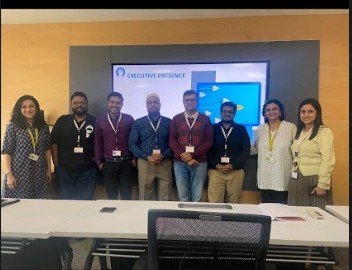
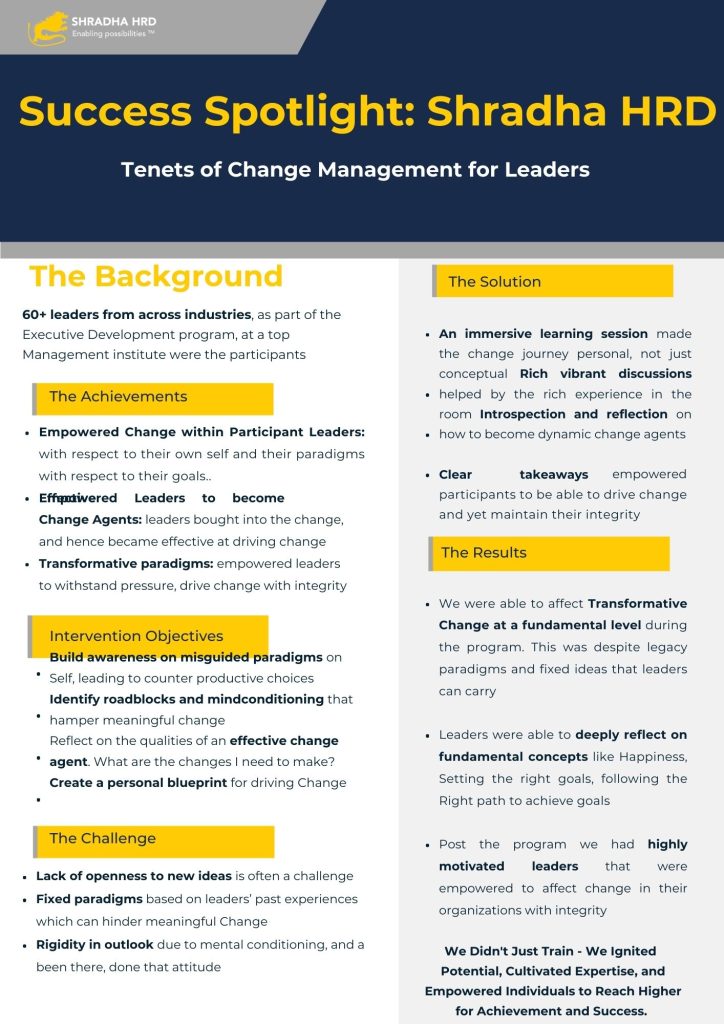
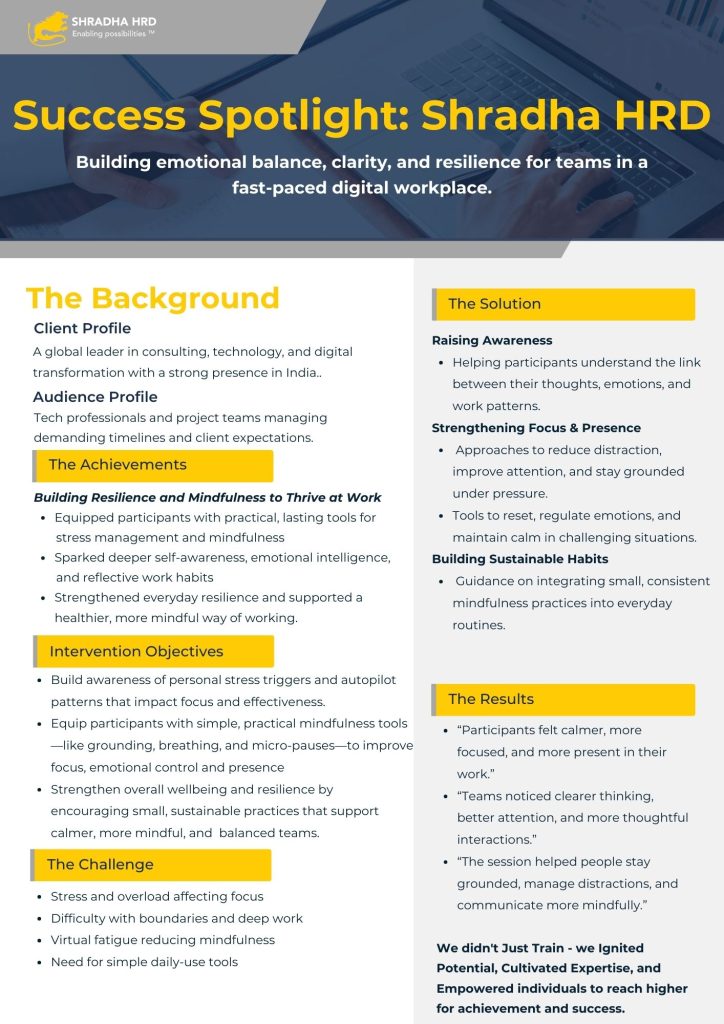
Executive Presence and Impactful Presentation Success Spotlight: Shradha

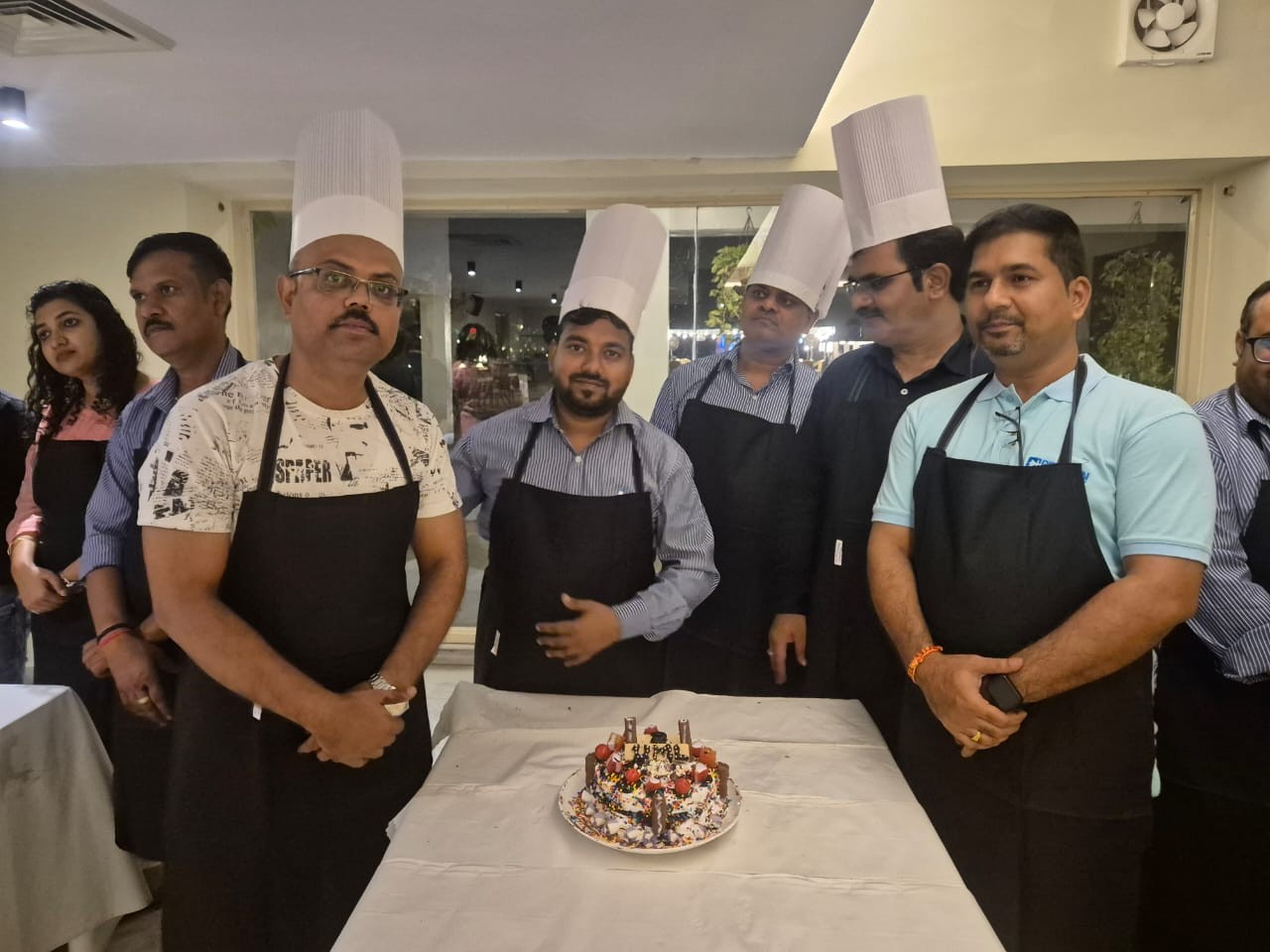
Happiness and Mindfulness
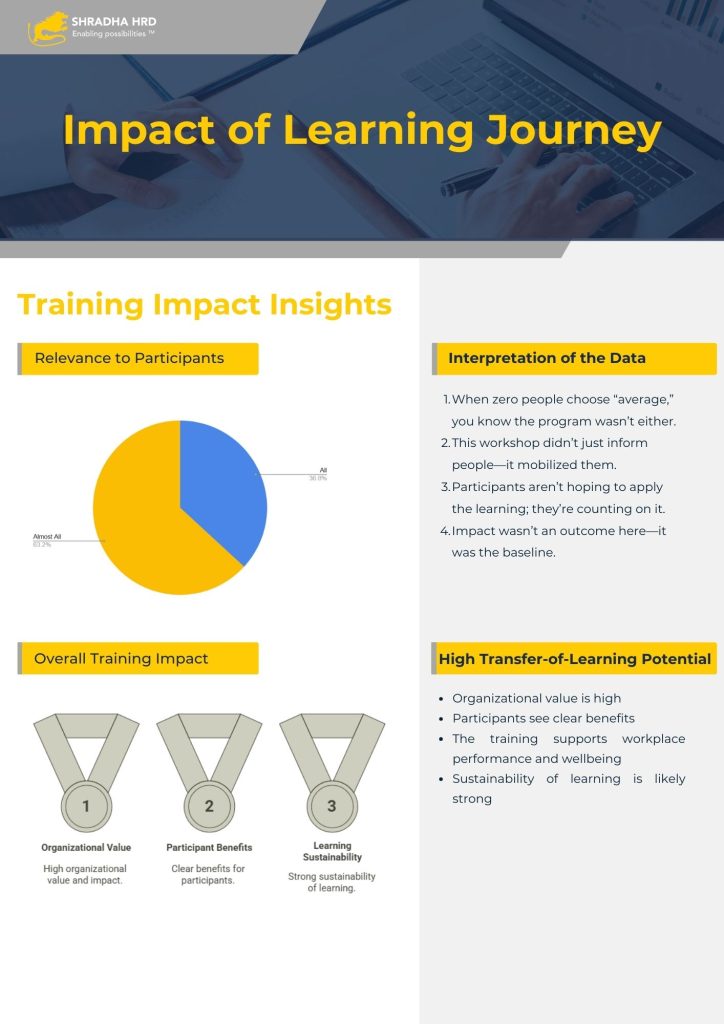
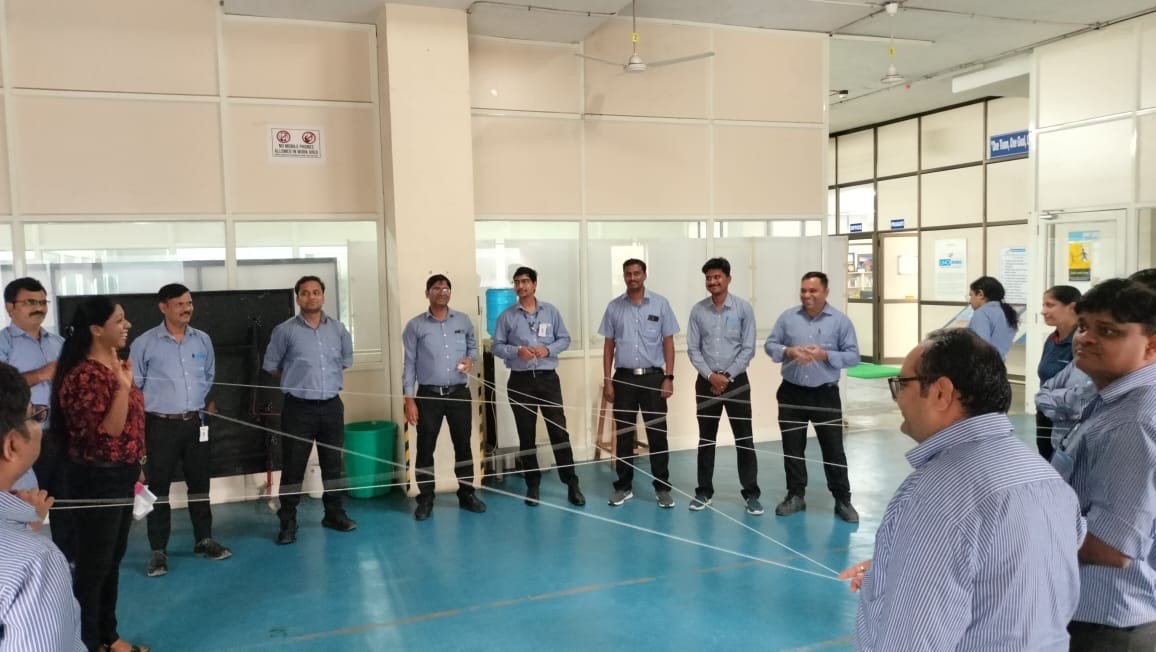
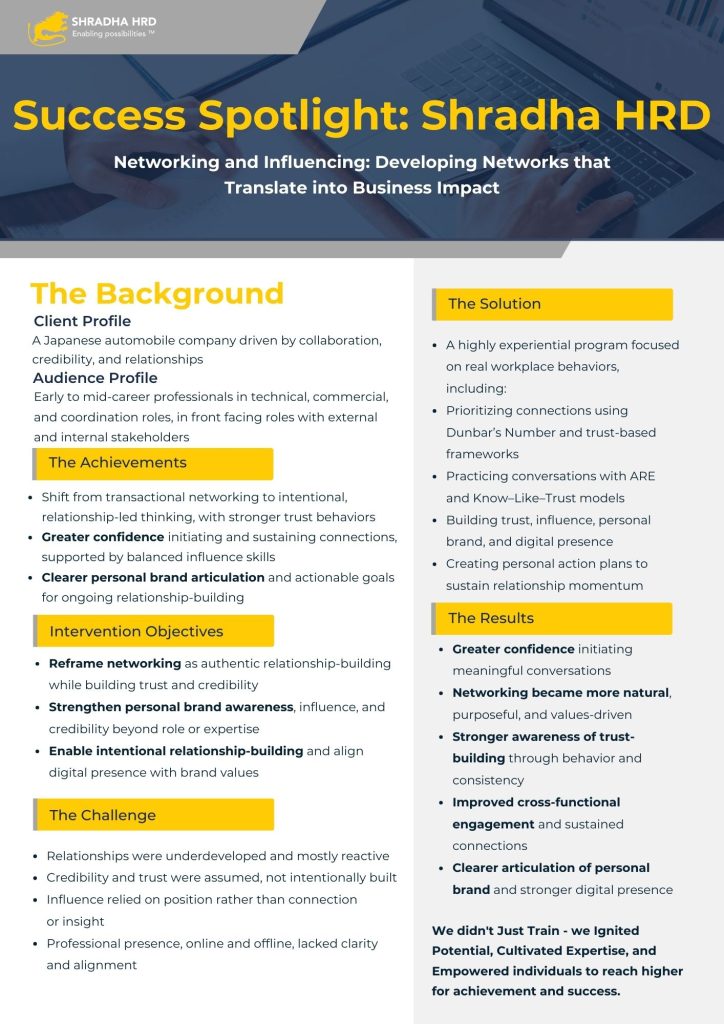
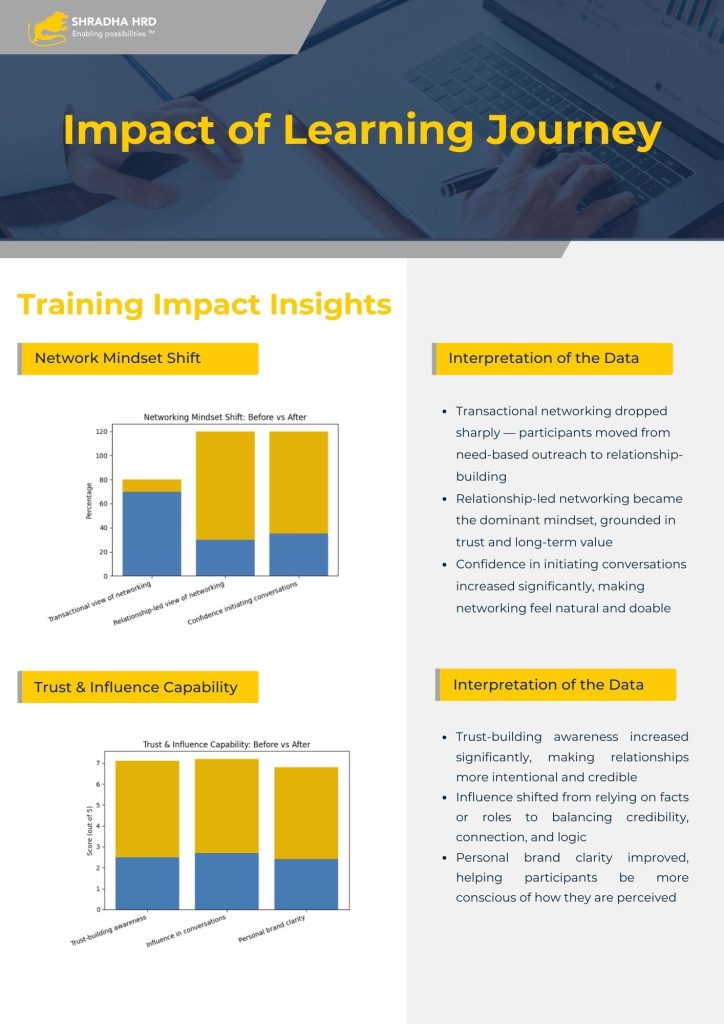
Networking and Influencing
Humsafar Program
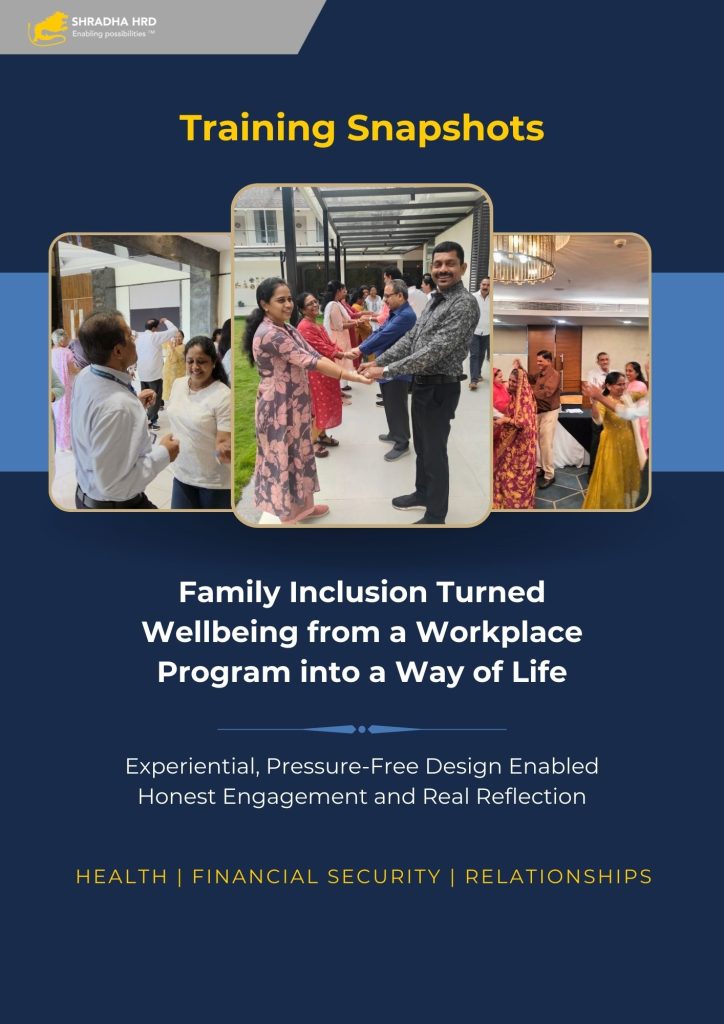
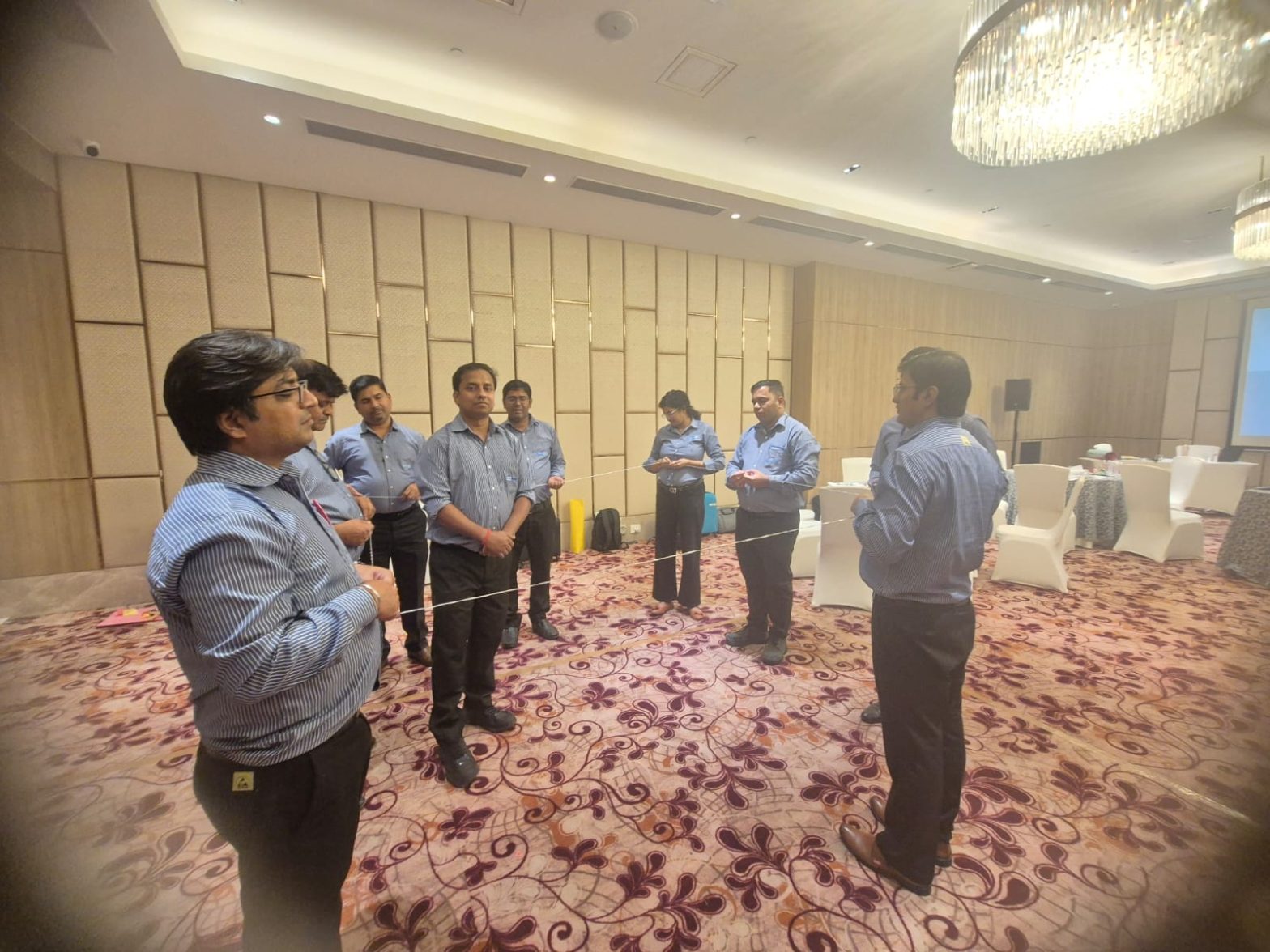
Ascend Empowering Front Line Managers
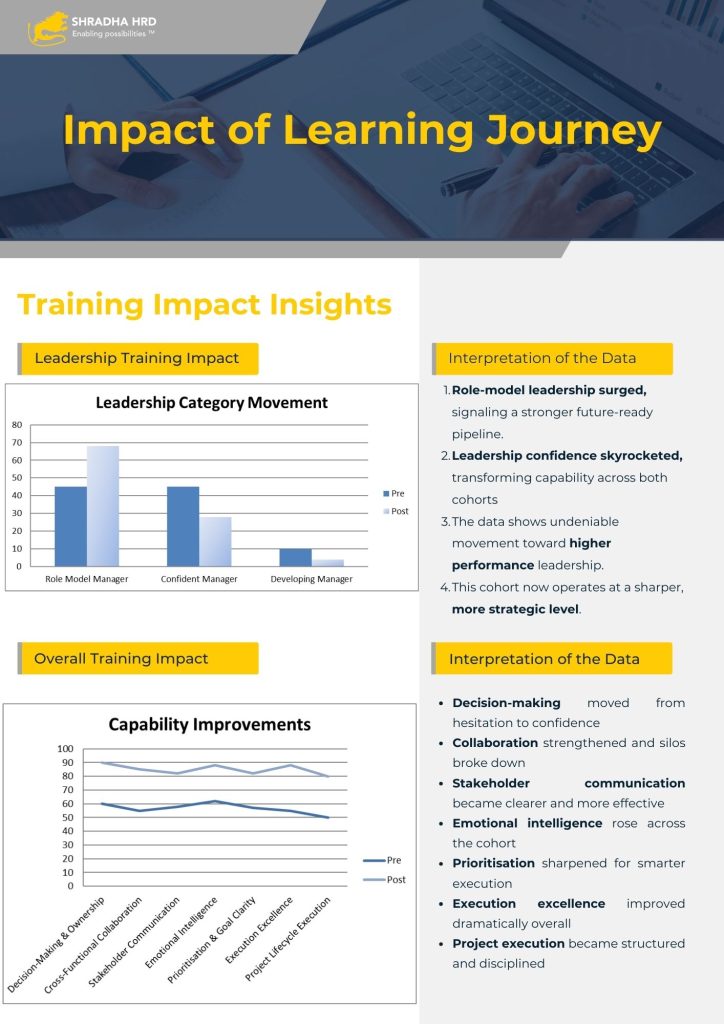
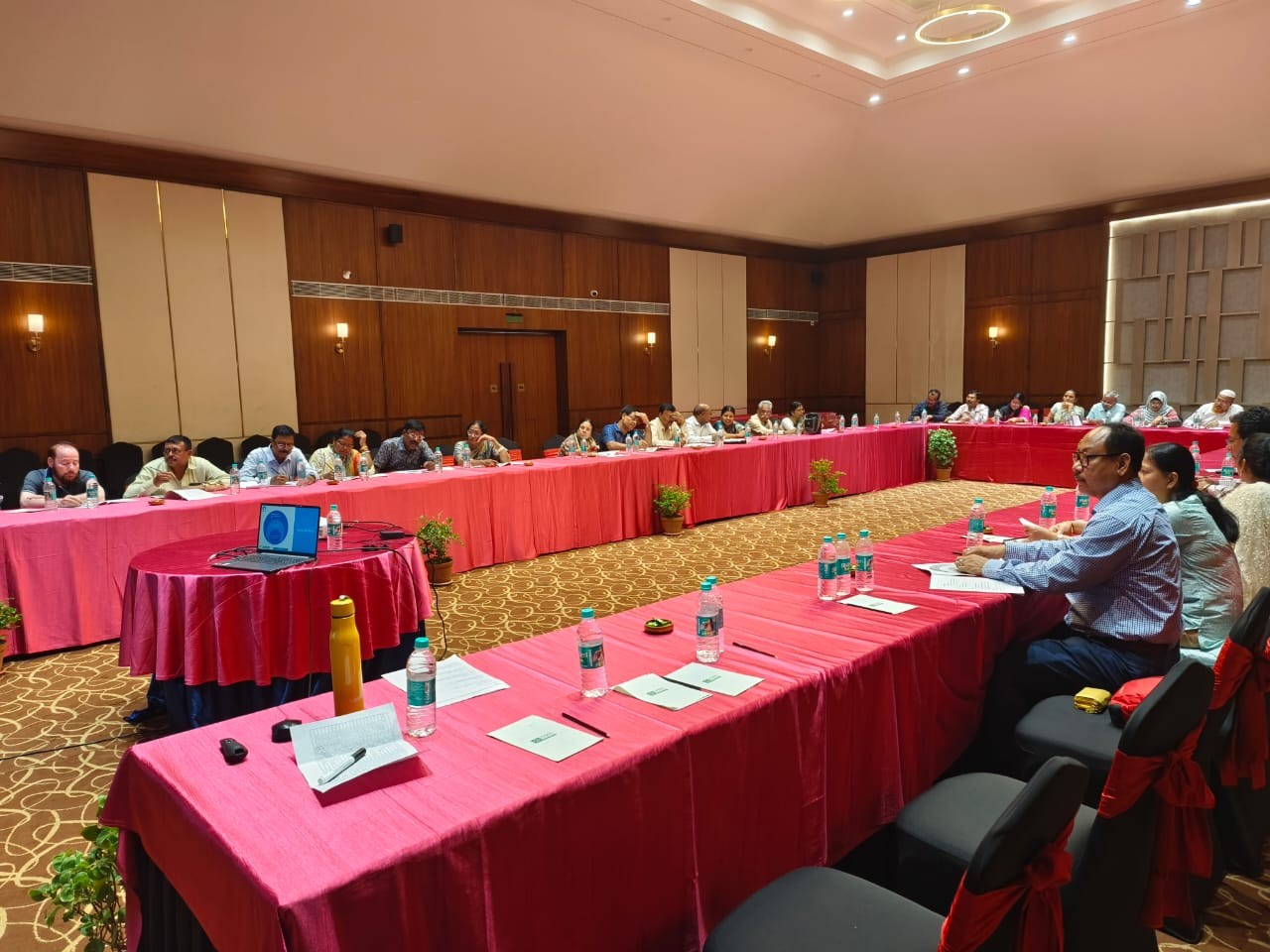
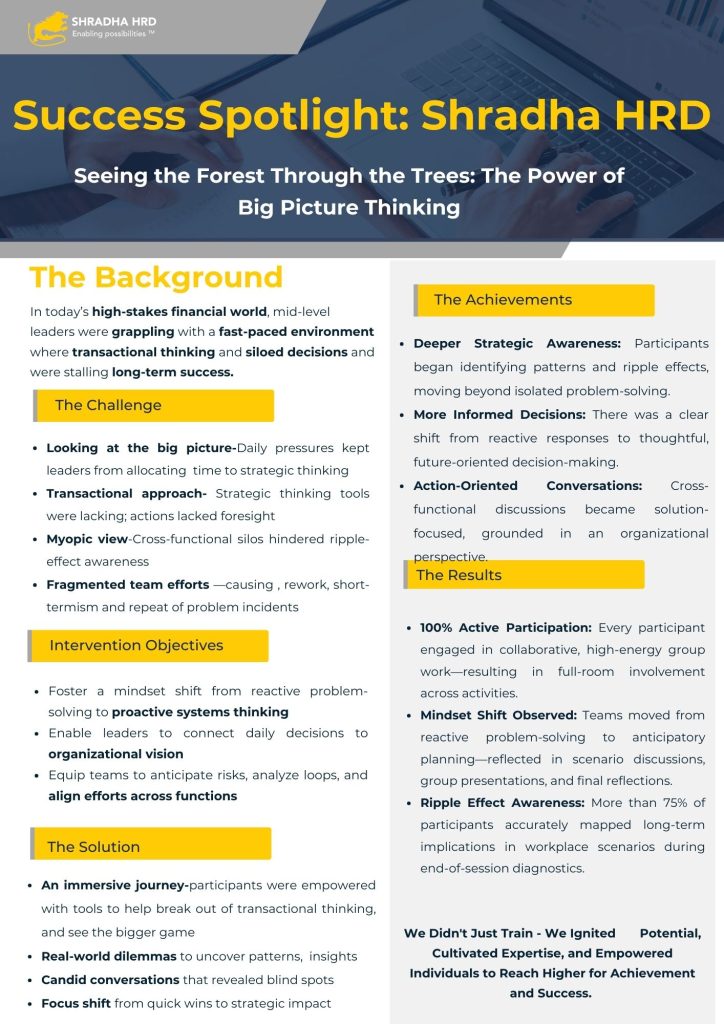
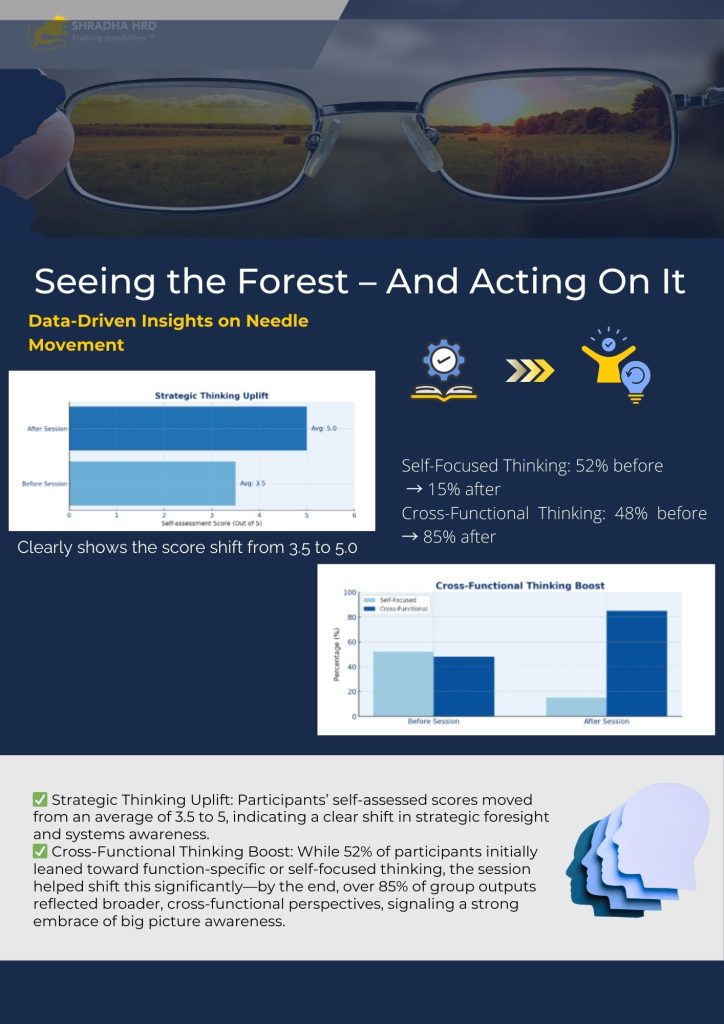
Big Picture Thinking
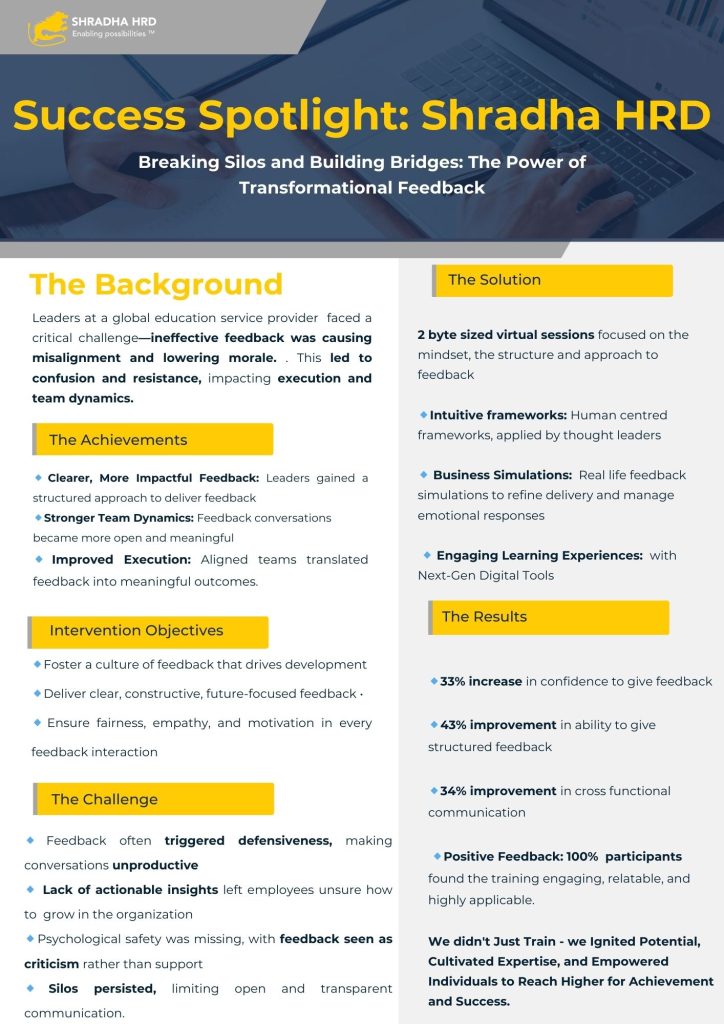
Breaking Silos and Building Bridges: The Power of Transformational Feedback
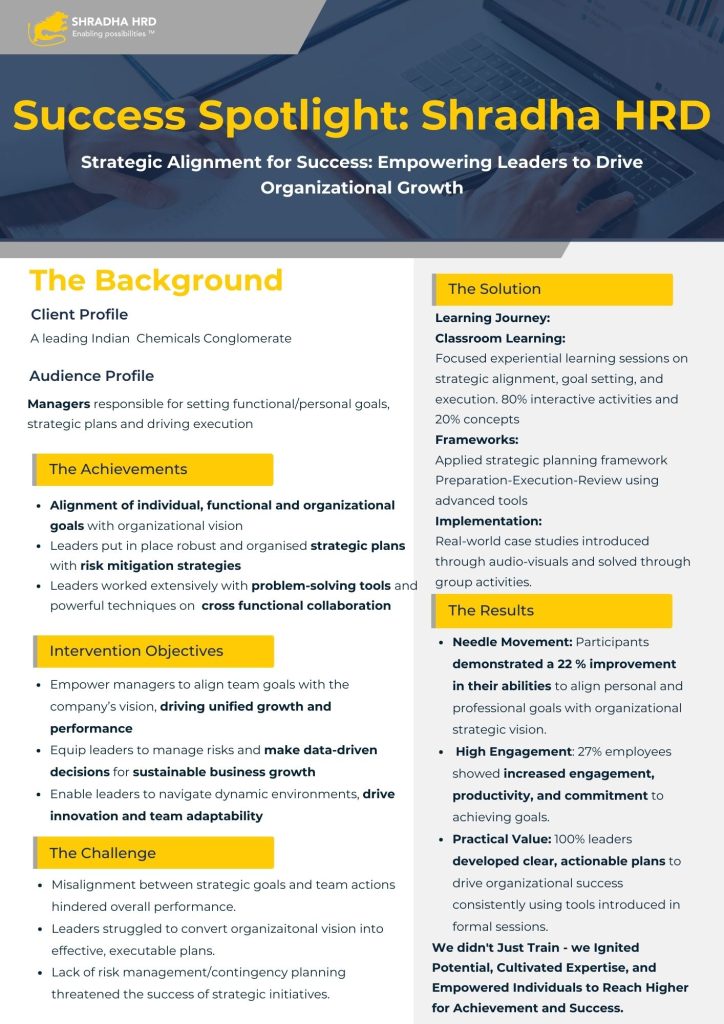
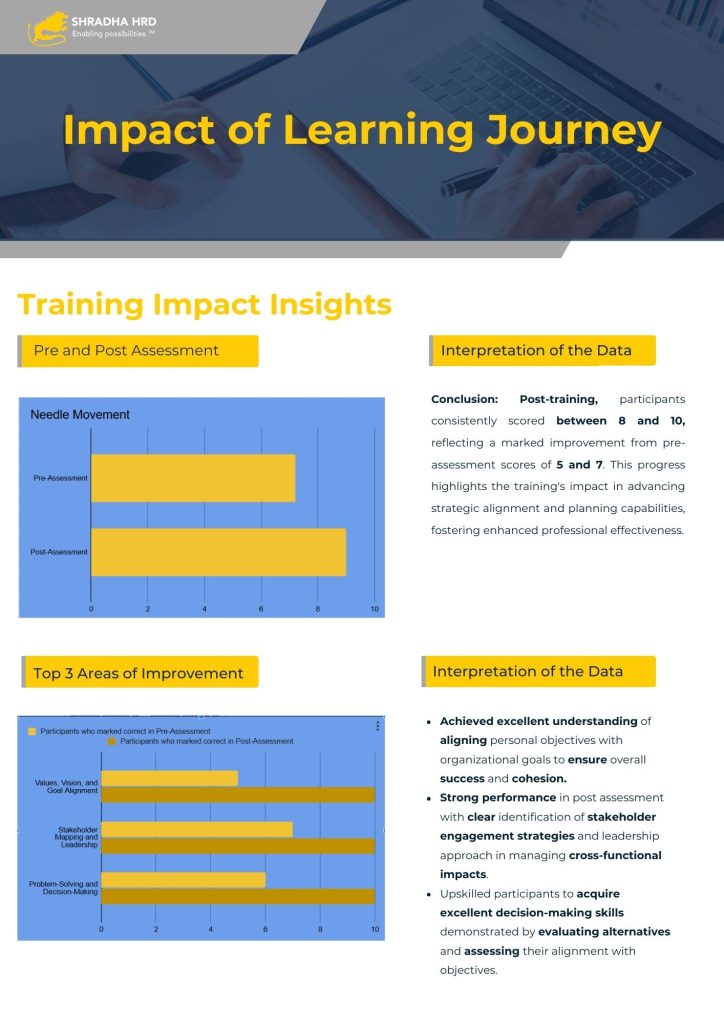
A Program on Strategic Alignment for Success: Empowering Leaders to Drive Organizational Growth

From Ace Shuttler to Transforming Lives…P Gopichand

I came across this amazing story of P Gopichand (2002 All England Badminton title winner) who is transforming the lives of athletes, mired in poverty and empowering them to win accolades for India
Some success stories:
- Agsara Nandini, the daughter of a domestic help who won a bronze medal at the Asian games
- Kunja Rajitha went from collecting firewood from the forest to accumulating medals at international meets
- Internationally celebrated para athlete Deepthi Jevanji, at one time did not even have money for a bus ticket to come to the academy
All this started when Gopichand noticed that several women athletes would periodically miss practice sessions. He learned that many were too poor to afford sanitary pads, and would need to miss training during periods.
This discovery led to an initiative that has now produced several national and international athletes for India.
The journey:
- To help, Gopichand started weekly races and give cash price to participants. This amount care of basic needs and buying food items
- The Mytrah group stepped in and the Gopichand- Mytrah foundation was born. A system was put in place where identified talented athletes were brought to the Academy which gave them accommodation food and training.
- Even if they could not win medals, the Academy helped them find some government job. It pulled the athletes out of poverty, and gave them a life of dignity
This is really a story of finding true purpose, service and transforming lives of those around us !!!!!

Do Women Make Better Investors than Men?

Do women get better returns on Financial Investments or men? I asked 20 people around me this question. 18 out of 20 people, from across the spectrum said….Men. Data tells us differently. Survey results released by ET Money on International Women’s Day:
- Women investors were found to be more disciplined while investing
- Better adherence to asset allocation, based on age than men
- Stick to a systematic investment plan better, as compared to men
- Over a 4 year period, women recorded better returns on investment than men
- In 2020, a challenging year for investors globally, women recorded returns of 14% on average while men recorded returns of 11%
A large percentage of women I know (including serious career women), shy away from handling their finances (me included, till a couple of years ago). This survey gives a clear reason why, we as women should step up and get involved in our financial planning. For me it was a little bit of a comfort zone to leave the stress to someone else. Once I started, I found it liberating. There was a sense of taking control.
I believe each of us should take up tasks based on our core competence but till we don’t try, how do we know how good we can be.
To all the super talented & intelligent women I know: stretch your comfort zone and step up!!!!!!
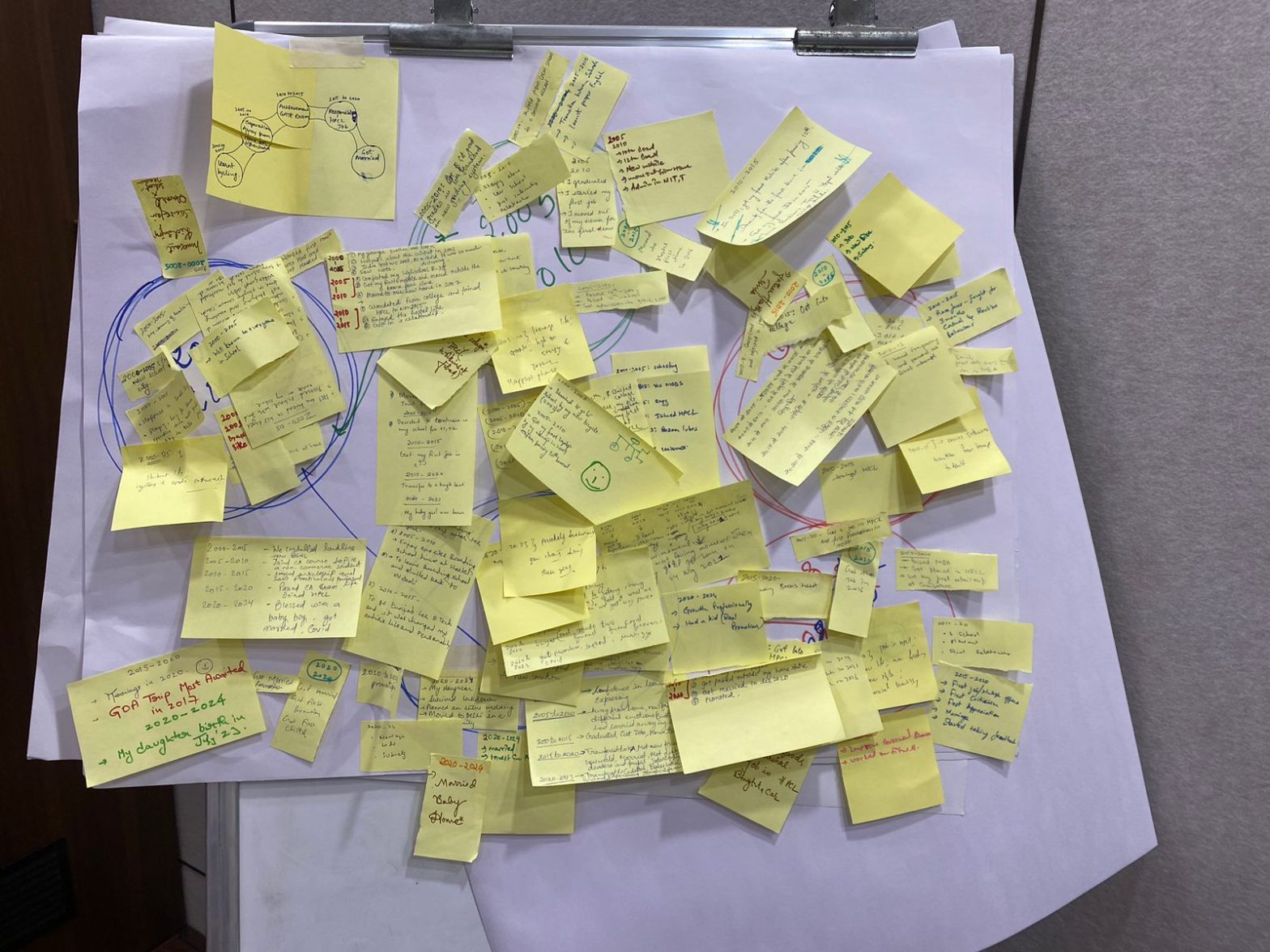
Empowering employees through the PATH Program to enhance performance and foster collaboration
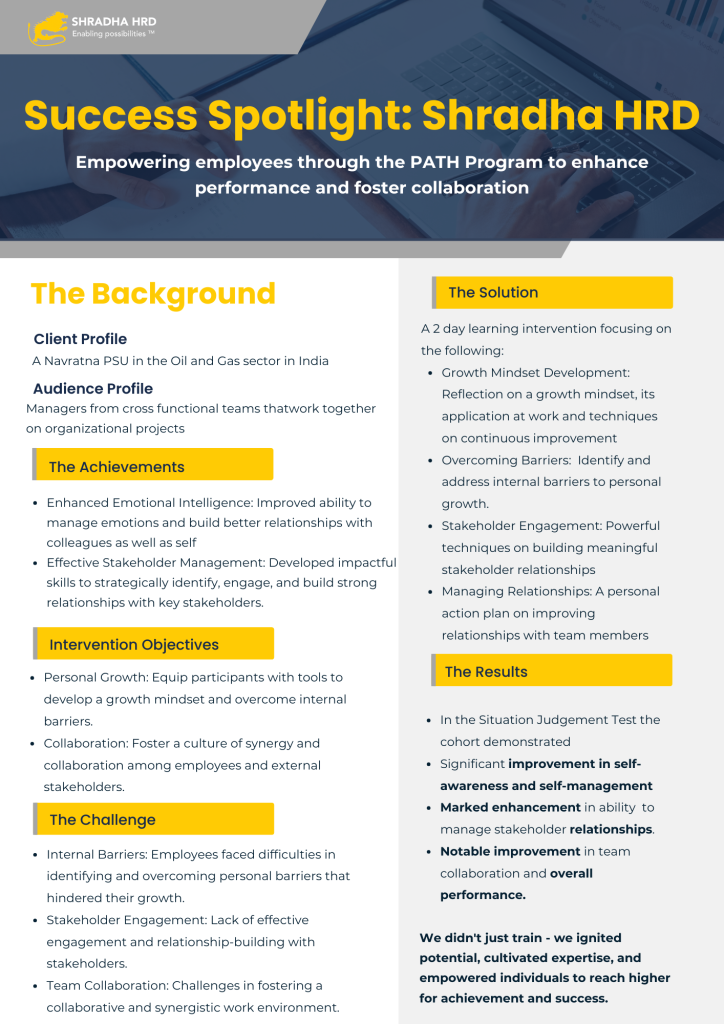
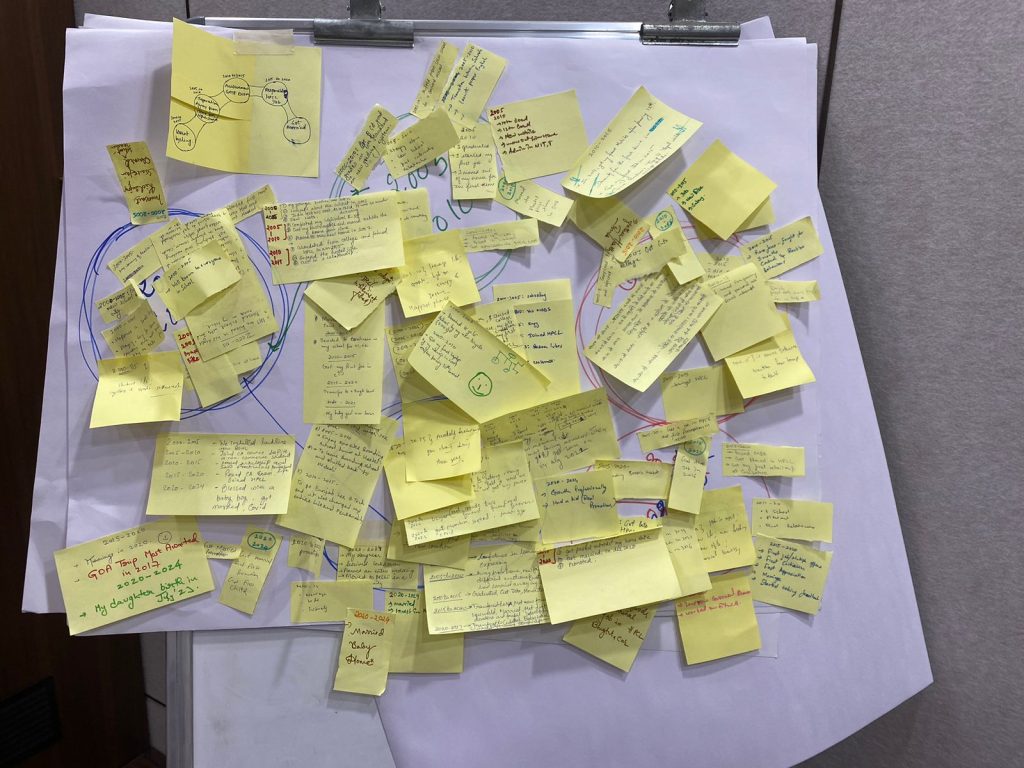

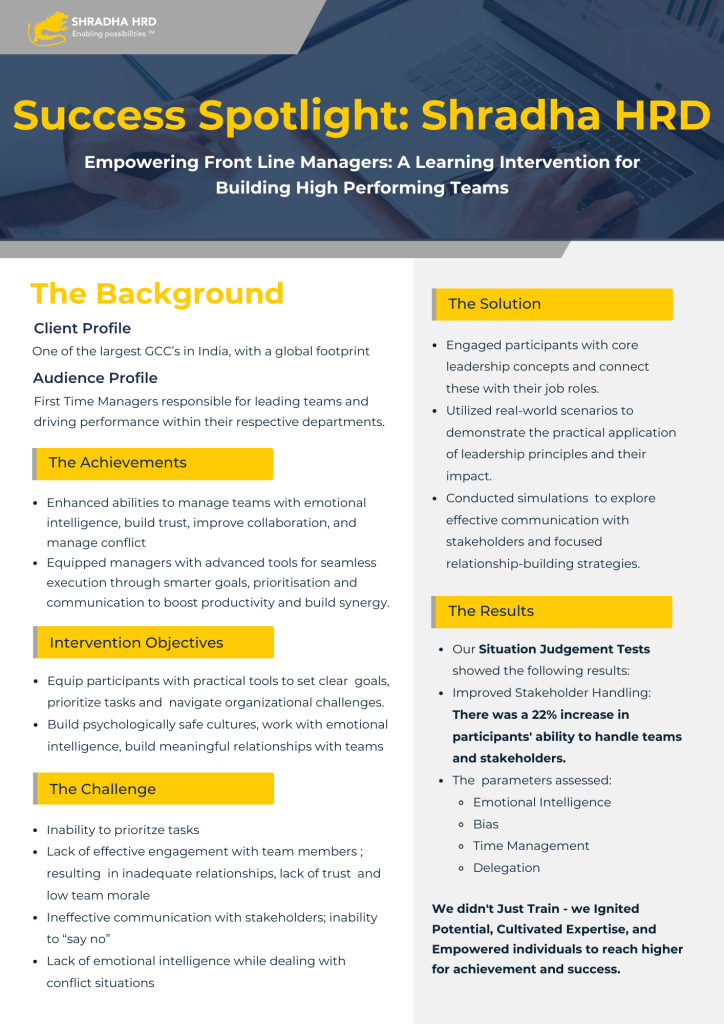
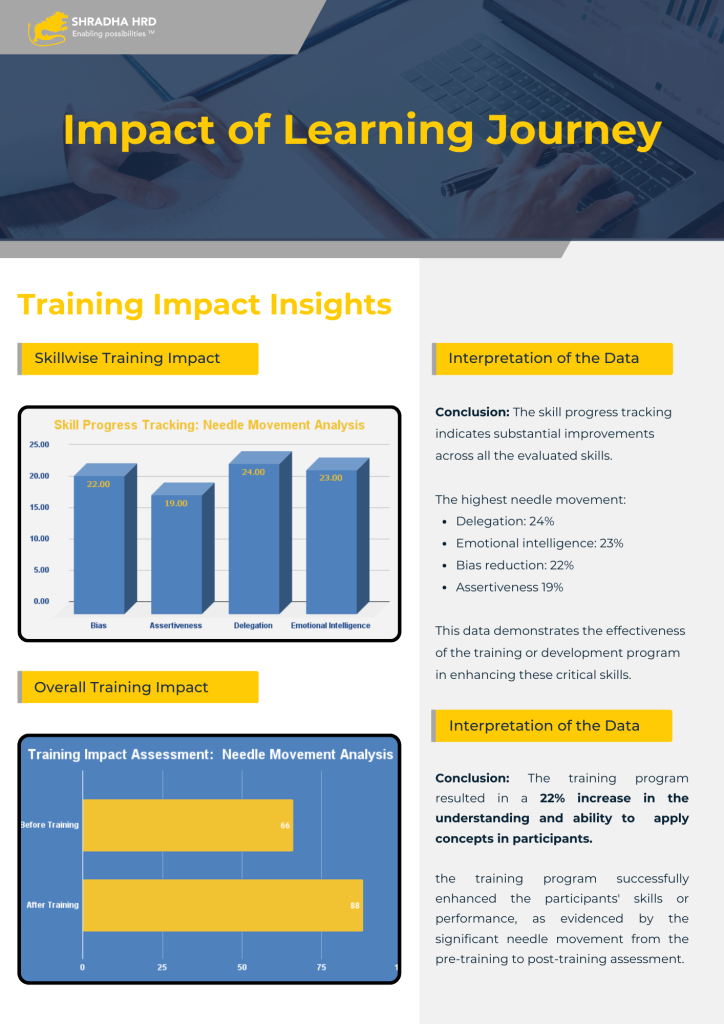
Empowering Front Line Managers: A Learning Intervention for Building High Performing Teams
The Coconut and Peaches Culture

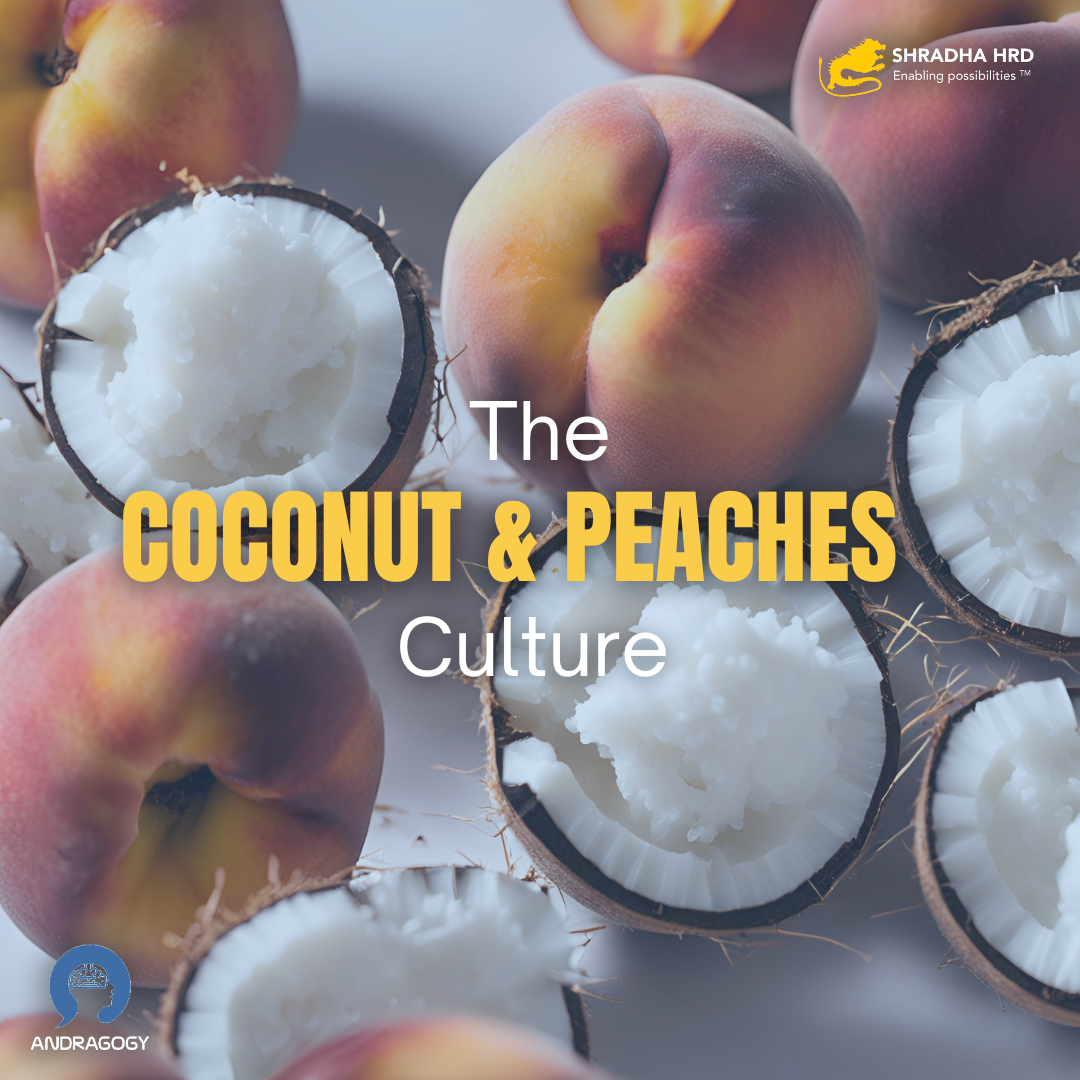
I came across a fascinating analogy to explain cultural differences. Peach and Coconut cultures. Peaches are soft on the outside with a hard nut concealed, at the core. Coconuts are hard on the outside but completely soft and pliable as we move within.
Ring any bells?
Several colleagues and clients are taken aback by the friendly demeanour they encounter when they travel to certain cultures in the West. A story to illustrate. A colleague, on a long-haul flight, had a very friendly American gentleman sitting next to him. They had a long, warm and interesting conversation on places to go visit, things to do etc. While disembarking, our colleague asked for his co-travellers number, in case he needed any information. The gentleman just walked on. An example of the Peaches Culture.
Conversely, I’ve had conversations with American friends who often say; it’s so hard to connect with Indians. They tend to be so reserved and formal. Even in something as basic as a greeting. A great example of a coconut culture
Our take: Cultivating cultural intelligence is essential. It is often achieved through initiatives such as cross-cultural training and open conversations.
Listening, observing and adapting communication styles to accommodate varying preferences for directness and assertiveness across cultures fosters effective interaction, understanding and communication
Emotionally Intelligent Leadership: Owning up for Team Failures
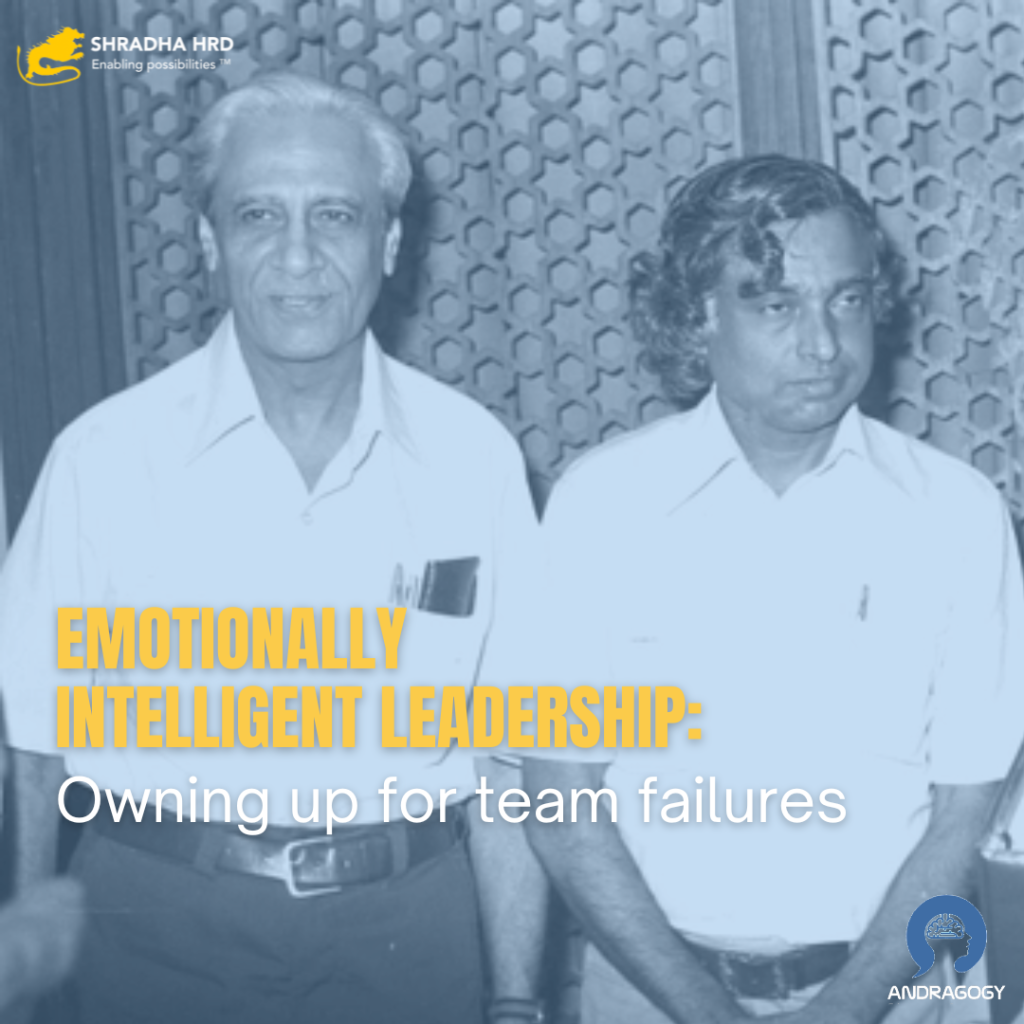
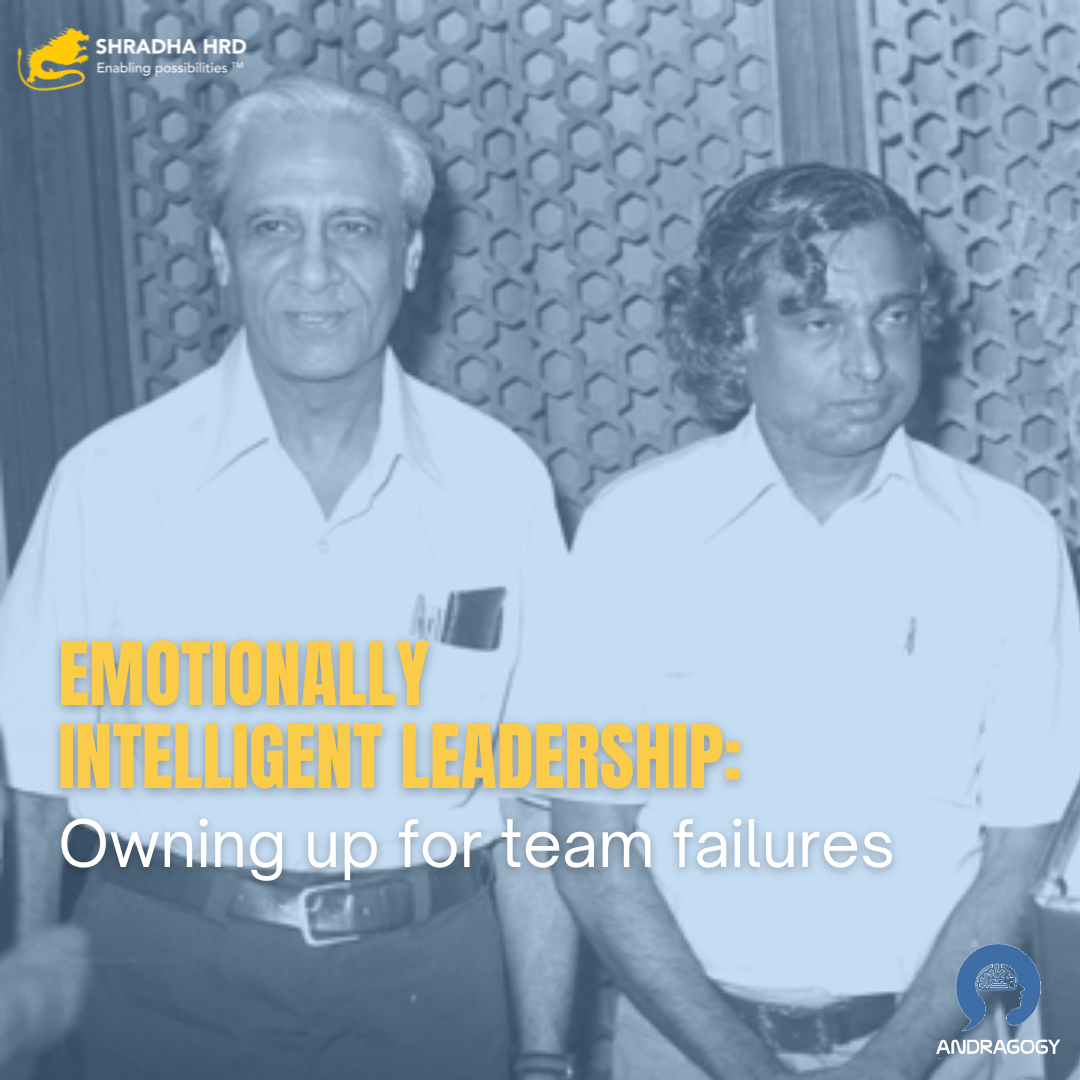
Mission Mangal gives a fascinating story on how leaders should behave, when the chips are down. It is based on a true story of Dr. Satish Dhawan and Dr. APJ Abdul Kalam.
In the opening scene in Mission Mangal, the leader takes responsibility for the unsuccessful mission, even though his team member is at fault. A year later when the launch is successful, he lets the team member take the credit.
This is modelled around a famous incident that took place when Dr. APJ Abdul Kalam was faced with the SLV-3 failure.
Prof. Satish Dhawan took upon himself the failure of the SLV-3 Mission at a public Press conference. A year later, after a successful launch he attributed the success of the subsequent Mission to his team.
Dr Kalam said “I learned a very important lesson that day. When failure occurred, the leader of the organisation owned that failure. When success came, he gave it to his team. The best management lesson I have learned did not come to me from reading a book; it came from that experience.”
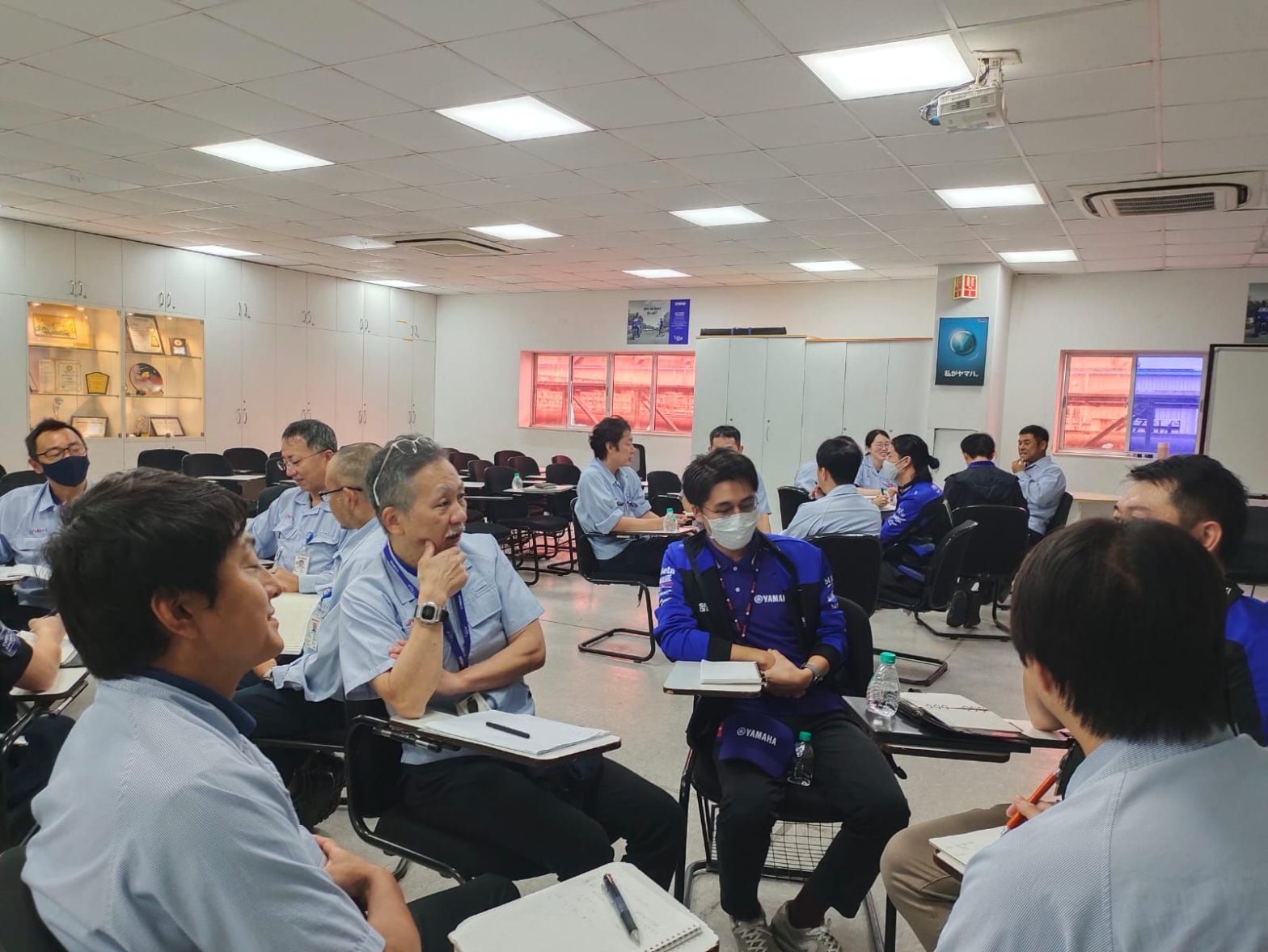
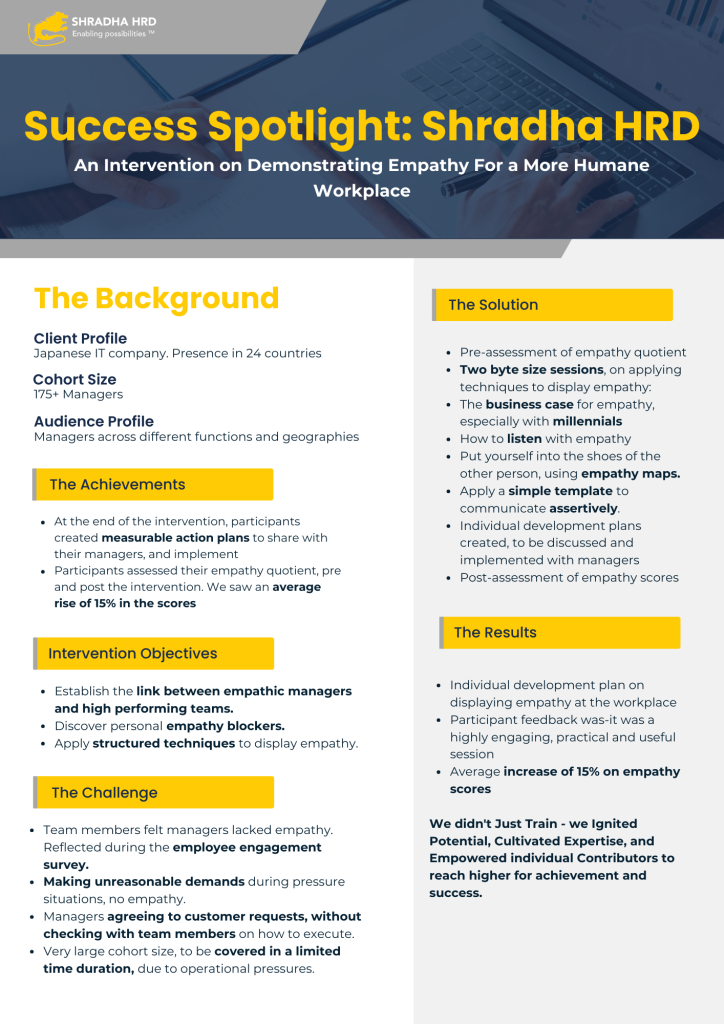
Diversity, Equity and Inclusion Intervention for the Leadership Team of a Two-Wheeler Japanese Manufacturing Company
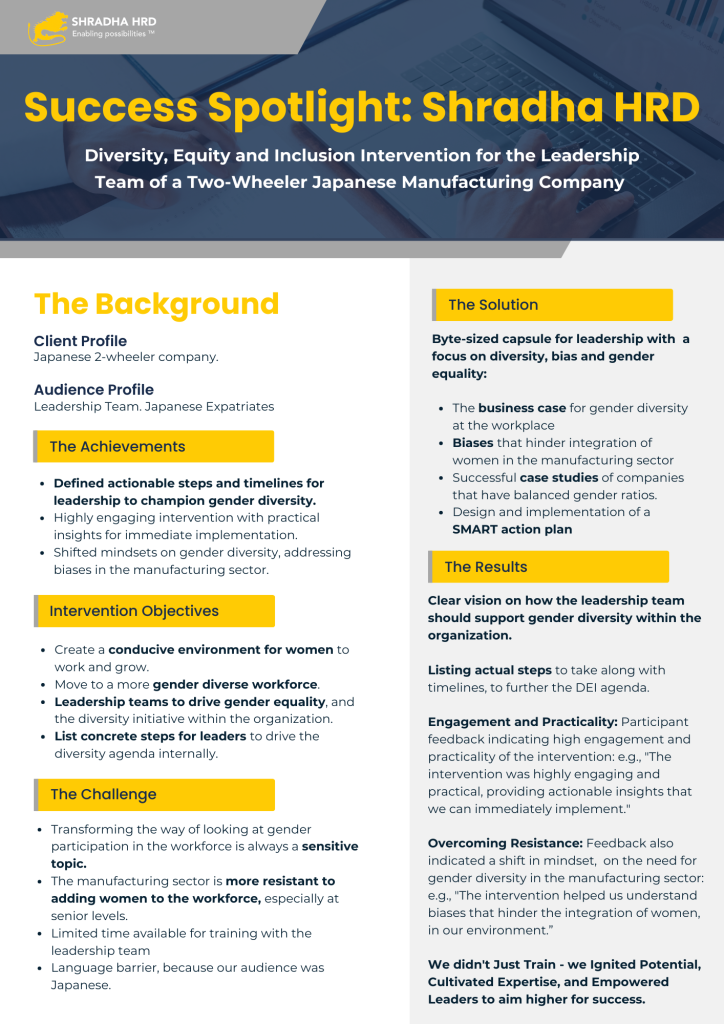
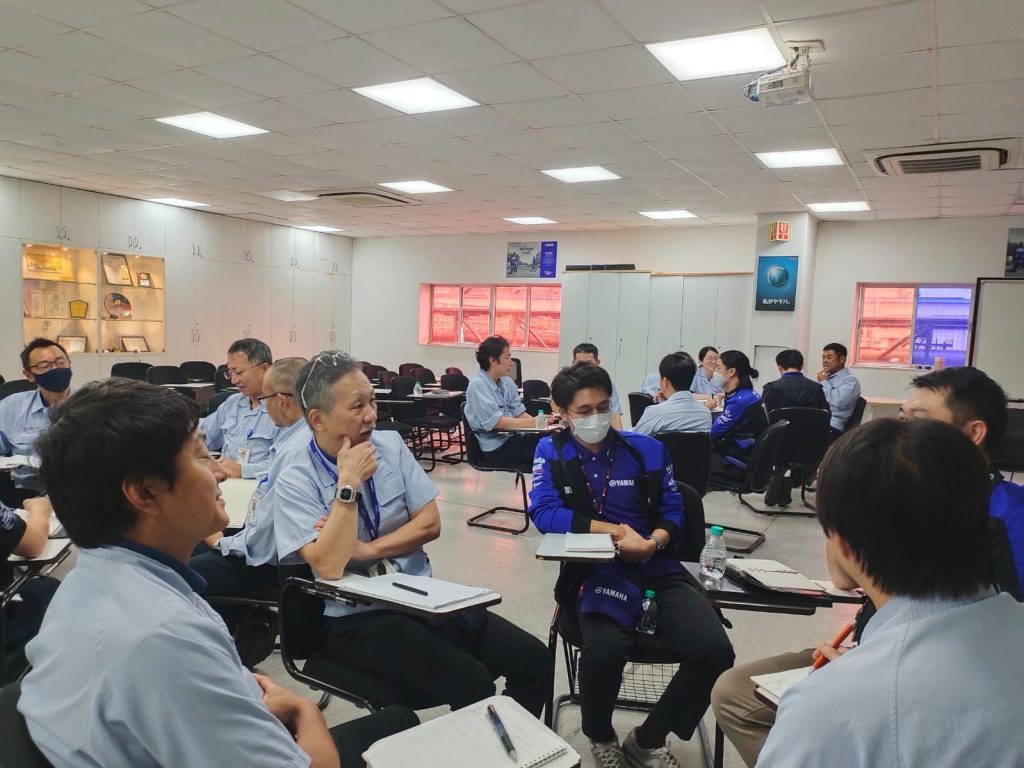
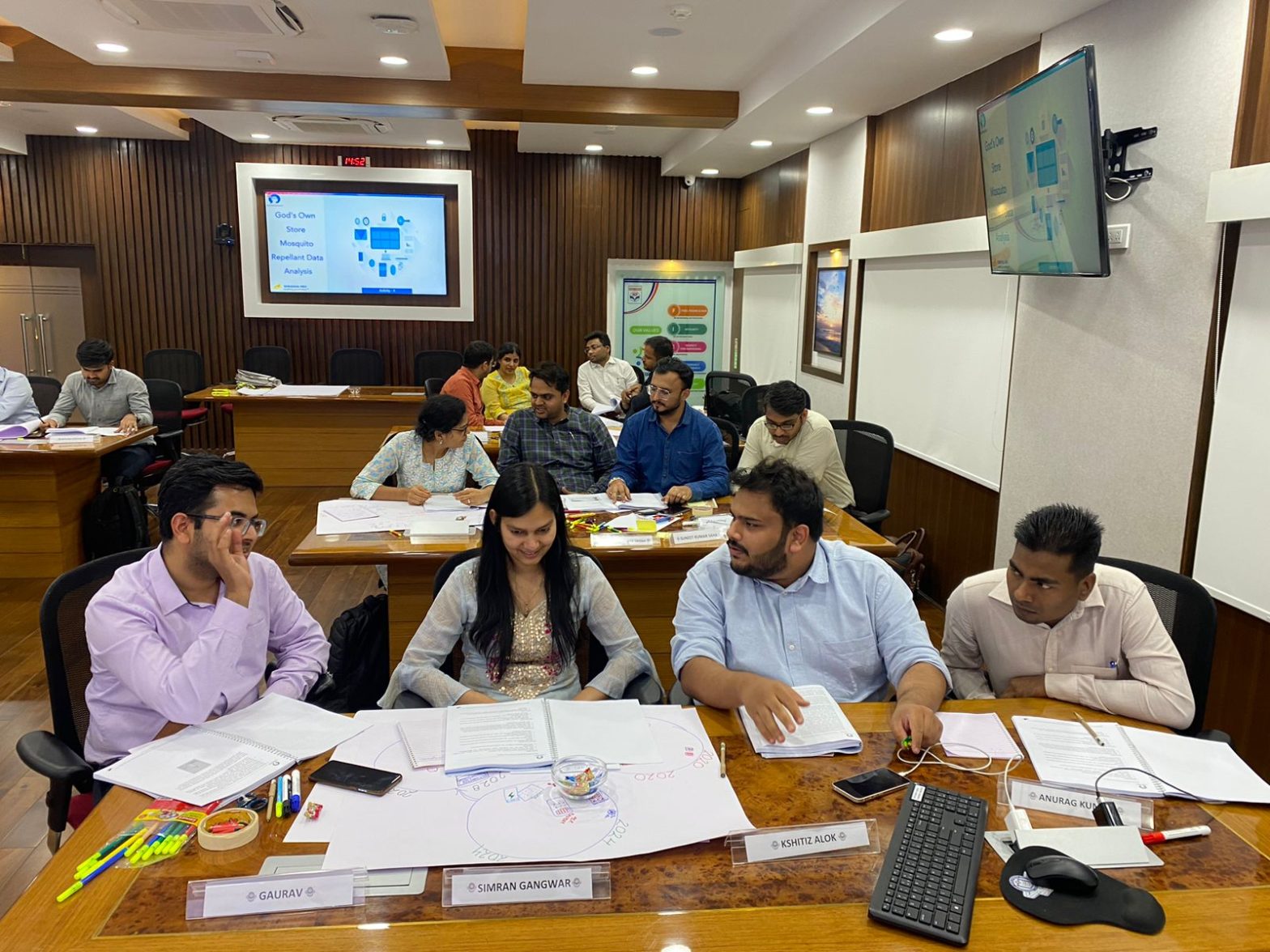
A Learning Intervention for Senior Managers of an Oil and Gas PSU on Thoughtful Leadership

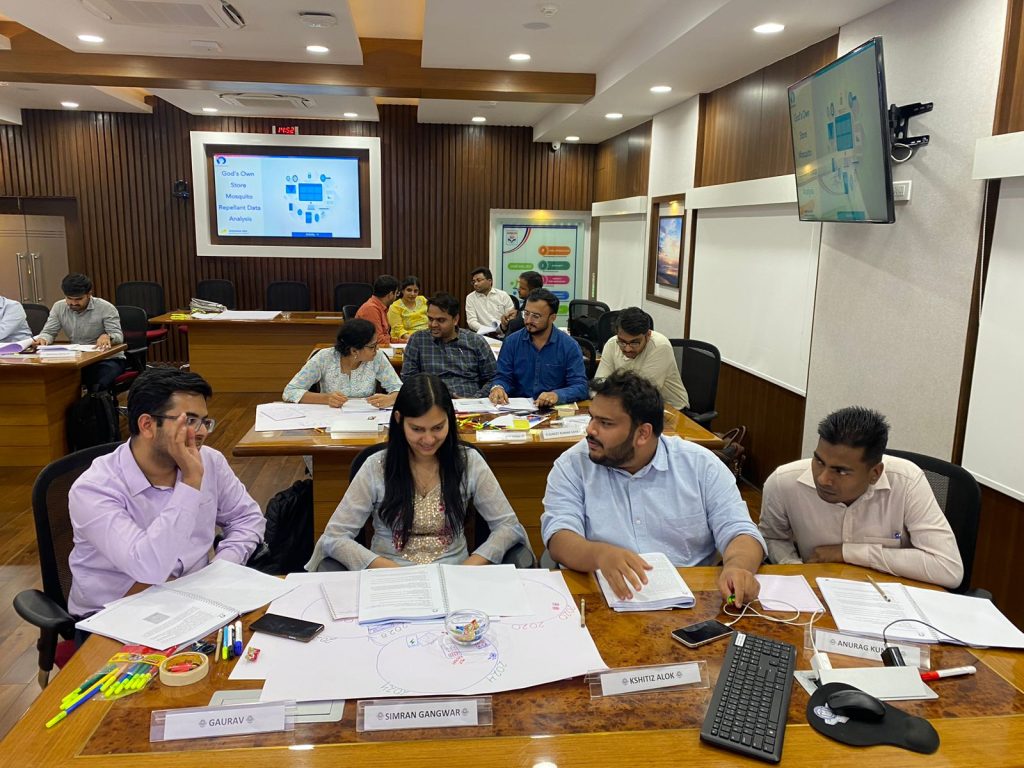

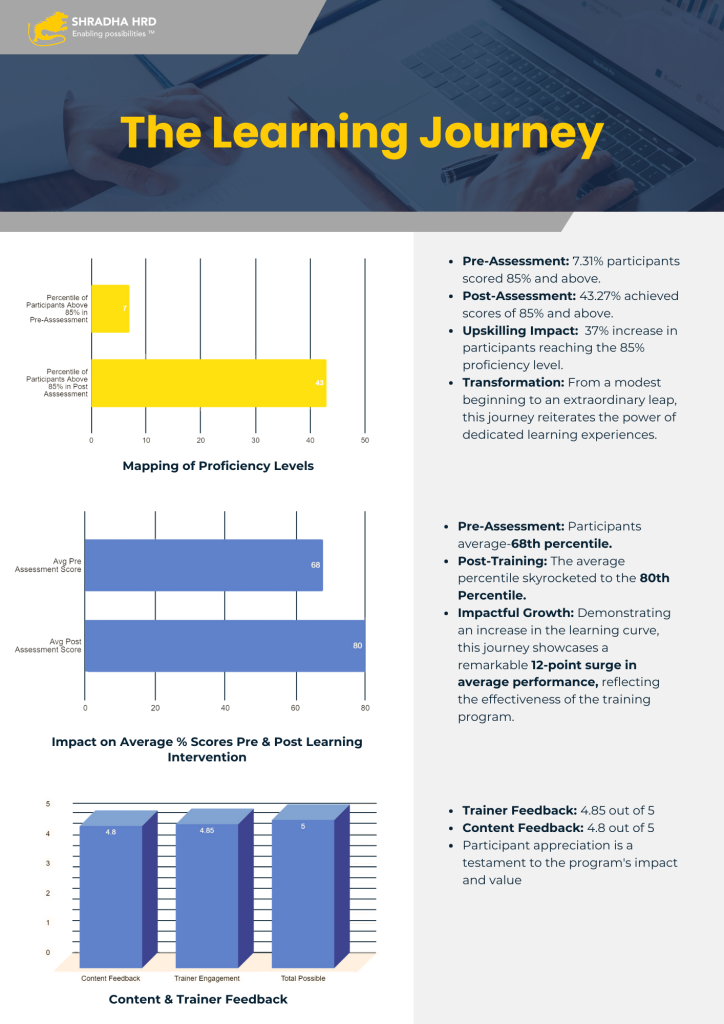
Compact: Onboarding program for 1000+ new joiners from campus, for a global technology company
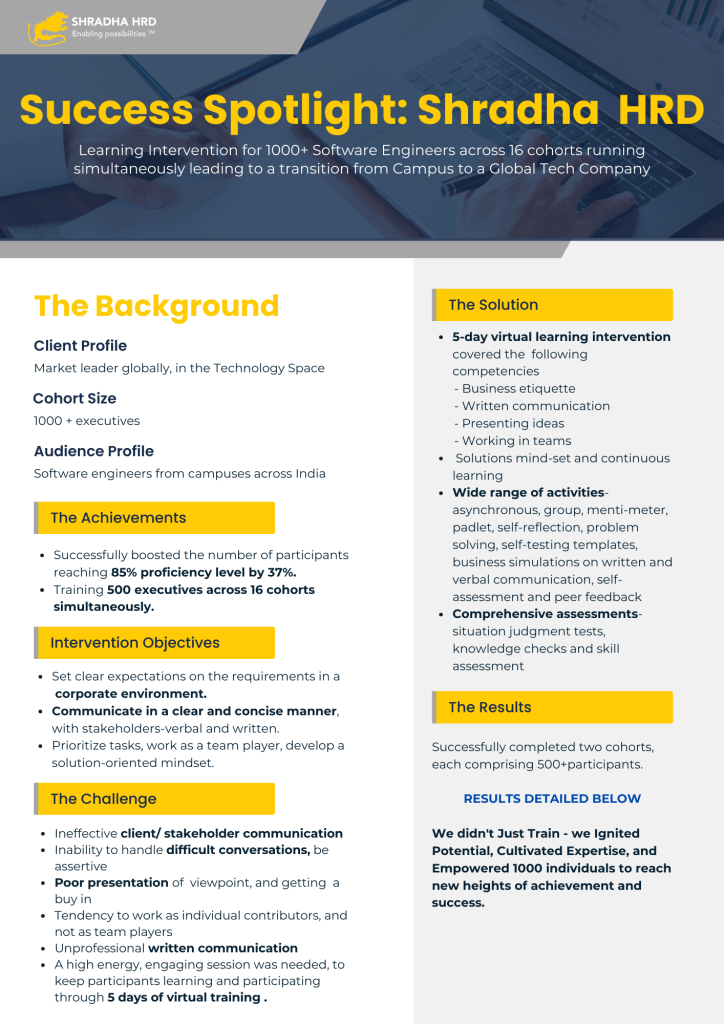
Empathy Amplified: a learning intervention for a Japanese IT company

Is Technology Completely Objective?
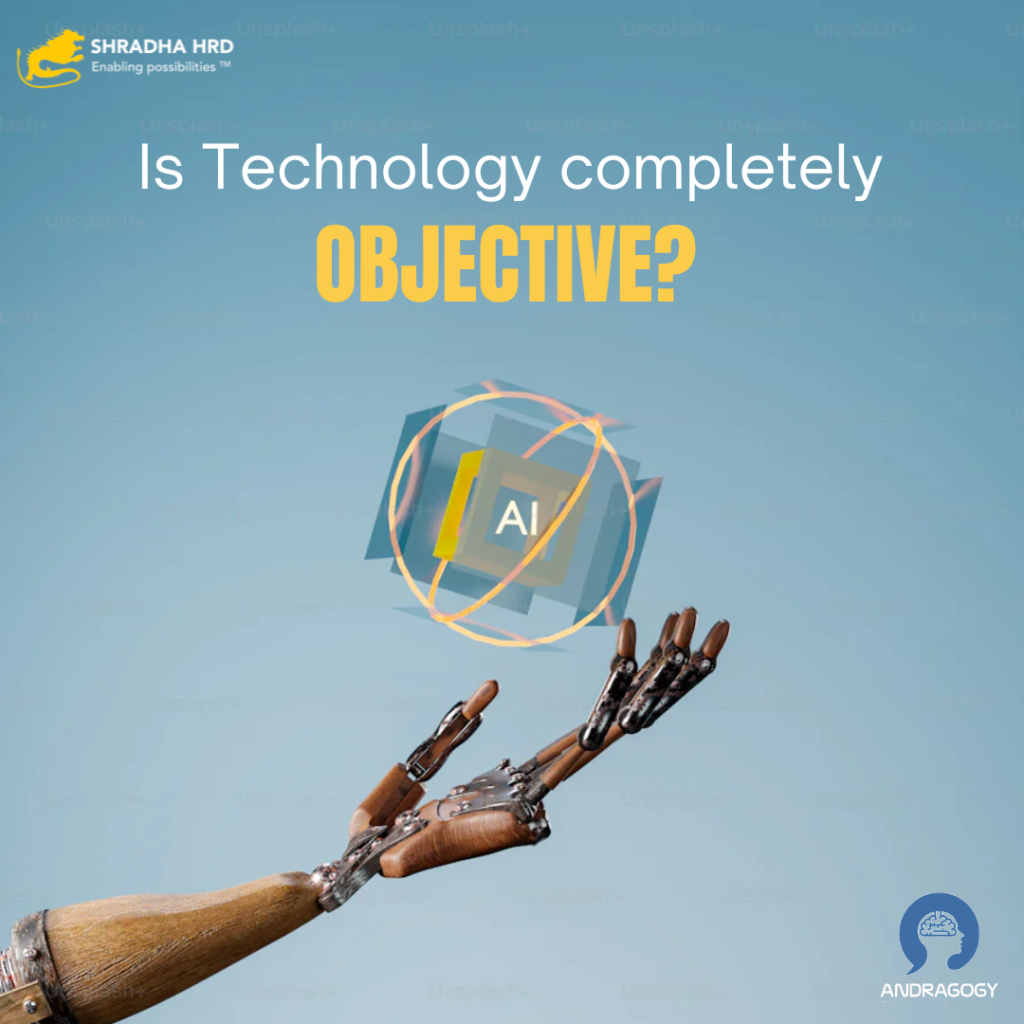
We automatically assume that technology can’t have biases. Only humans have biases. Objective decision making is a compelling reason for technology adoption. However, data tells us a different story. Some interesting data to reflect on:
- A couple of years ago, Google announced their speech recognition had a 95% accuracy rate. However, voice-activated searches still carry gender biases.
- Meredith Whittaker, director of the AI Now Institute at New York University, noted that voice-recognition tools that rely on AI often don’t recognize higher-pitched voices. These mainly belong to women. The systems are not as well equipped to interact with women as with men.
- Research by Rachael Tatman from the University of Washington indicated that Google’s speech recognition is 13% more accurate for men than it is for women.
Why do we see these results?
Tech is largely male-dominated. Recent studies found:
- 18% of authors at leading AI conferences are women.
- 80% of AI professors are men, globally.
- Women comprise only 15% of AI research staff at Facebook & 10% at Google.
Technologies often reflect the gender biases in society and the lack of diversity in the design teams
Designers and software architects have their own biases. These are reflected in the way they create and train the technologies they work on.
Source: “Sway” by Pragya Agarwal